You have made a wise choice by selecting a puppy from Poodles By Design. This puppy will bring you much joy and companionship for many years to come if the proper care and attention is given.
To ensure that your new puppy enjoys a happy and healthy life it is imperative that YOU (the new owner) take responsibility for its proper care.
FEEDING –
FOOD - Your new puppy will need to have fresh food TWICE a day. Once in the morning and again in the evening. Feed your puppy enough food to last until the next meal. Toy breeds need to “graze” during the day. If there is any old food left in the bowl always throw it away and give your pup fresh food.
Small-breed puppies have higher metabolic requirements per pound of body weight than large-breed puppies, and require more protein and fat to support their energy needs. Be sure to use a quality brand (such as Purina Puppy Pro-Plan, Royal Canin, Eukenuba or Science Diet) that is specifically formulated based on the calories from protein needed for the appropriate protein-to-fat ratio.
WATER – Please give fresh water DAILY!!!
CAUTION: DO NOT feed your puppy any milk, table scraps, or change your puppy’s diet in anyway. This will result in diarrhea making your puppy very ill.
STRESS –
Going to a new home, being handled, traveling, or too much play time can sometimes lead to a very stressful pup. This causes digestive problems and even diarrhea.
To assure that your new puppy will not suffer low blood sugar that is brought on by STRESS, Karo syrup or honey (1/2 teaspoon) should be added into the water during the two week adjustment period.
A product called NUTRA-CAL should also be used (approximately 1 inch twice daily) to give a new puppy the extra calories needed to keep its blood sugar from dropping.
Sometimes stressed puppies do not want to eat. Your new puppy MUST eat within 12 to 16 hours the first day you take it home or it could get weak. This may result in seizures, better known as hypoglycemia, which is LOW BLOOD SUGAR. If proper care is not given right away, it could be imminent death to your new puppy.
EMERGENCY STEPS – drizzle ½ teaspoon of Karo or Honey straight into your puppy’s mouth. This must be done slowly and with care so not to aspirate your puppy. This should help get your puppy’s strength back within 5 minutes. It is recommended that you immediately call your vet for further advice.
IMMUNAZATIONS –
DO NOT give any shots when you first get your puppy! Wait at least one week until the puppy has settled into its new home. Shots will put a puppy into stress and could make them not eat.
Your first visit to the vet will be for a health check required by the breeder within 48 hours of acceptance of your puppy. At this time you will set up a plan for completing required immunizations. Ask your vet about heart guard at nine weeks of age. For toy poodles I recommend waiting until 6 months of age for rabies vaccines. If you follow these recommendations your puppy will remain healthy throughout its life.
GROOMING -
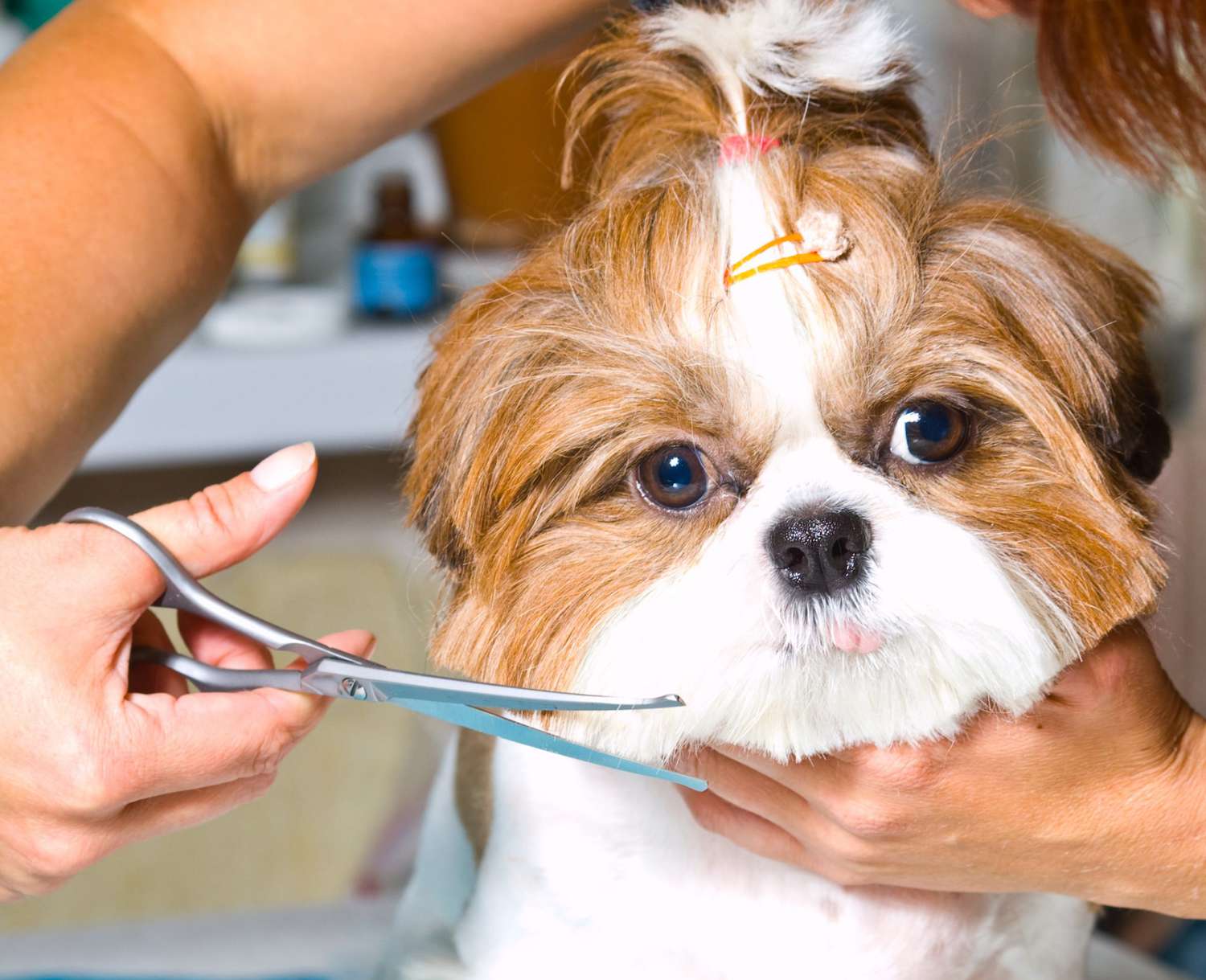
Your new puppy has been delivered to you groomed, and pre-spoiled. Your Poodle has been freshly bathed; toe nails trimmed; hair in the ear canals removed; face, tail and feet have been shaved; and the coat is scissored to a pleasing shape. Now you want to learn the basics of coat care, because this is an important part of keeping your Poodle happy and healthy.
Prior to being bathed, your Poodle must be brushed out thoroughly. I recommend an oatmeal based shampoo to keep skin moisturized. This helps the skin from becoming dry and itchy. Blow dry your Poodle under low heat from you hair dryer, using a brush while blowing dry. Make sure to use a pin brush when blow drying, and NOT a wire slicker (which is meant for badly tangled coats and will pull and damage hair). To ensure that your Poodles coat remains tangle free it is a good idea to brush your Poodle every other day or so. If the coat does become tangled and matted the coat may have to be shaved completely, something you want to avoid. However, the good news is that a Poodles hair re-grows quickly.
Clipping a Poodle should be left to a professional groomer in the beginning; however many owners learn to do their own trimming in time and enjoy the challenges.
Ears should be cleaned weekly. GENTLY pulling out the long hairs from the ear canal. Use moistened cotton wrapped around your finger to swab the ear canal. If your Poodle is scratching its ears or if the ears have a bad odor, SEE YOUR VET IMMEDIATLY.
Clip toenails every week or two. This is very important. Take off only the tip ends of the nail, as you do not want to cut into the "Quick". This will hurt your Poodle and cause it to bleed.
Grooming should be a pleasant, and safe experience for your Poodle. Do not frighten your Poodle or make it nervous about grooming. Poodles are very smart, and they love being pampered.
And best of all, because Poodles do not shed, they make a perfect breed for people with allergies and asthma. They do require more maintenance, but they are well worth the effort!!!
HOUSE TRAINING –
All of our dogs are litter trained using the amazing, incredible, innovative Purina SecondNature® Dog Litter and House Training Elimination System. This process helps keep our dogs clean and reduces odor in our home. It is a paper-based pellet that effectively provides high absorbency and promotes cleanliness.
GETTING STARTED WITH SecondNature Litter:
TWO SIMPLE STEPS TO SUCCESS
Supplies: Correct size litter pan; pellets, bedding; play yard; toys and feeding dishes.
step 1: SETTING UP -
• The best place to put the litterpan is in a confined area (we use wire play yards) that is centrally located near family activity - like the kitchen, family room or foyer. Place your pups bedding, food and water at least 2 - 3 feet from the litter pan. Fill the pan just 1" full of litter pellets.
step 2: ROUTINE -
• Place your puppy in the litter pan after crating, eating, exercising and sleeping. This is a process of about every three (3) hours. Provide positive encouragement such as, "Go potty!" and praise your pup when eliminating in the pan, "Good Puppy," and "Good Doggie!".
tips -
• Keep the litter pan in the same spot, so the pup will return to the same spot each time. If you move the pan and the pup smells a hint of odor in another spot it will confuse your puppy. By leaving the litter pan in the same spot you will reinforce what he is there to do.
• Keep your puppy properly contained. When your puppy is out playing you must be with it every minute. To keep accidents from soiling a rug during playtime I recommend little doggy diapers. I use "cut-to-size" Kotex for pads (as they are cheaper and more absorbent then the pads sold to go with the doggy diapers). It is not recommended to use doggy diapers for extended periods of time because they will cause rashes and irritations.
• Never allow a puppy to wonder around the house freely. When you are at work or away your puppy must be confined in a play yard, or one small room (bathroom or washroom). During this housebreaking period, your puppy must learn that this confined area is its own little "den", where it will sleep,nap and stays when it must be left alone.
• If you are using a crate to help house train, keep in mind that a puppy cannot control elimination for long periods. A gauge to go by is to add one to the pups age in months to equal the number of hours your pup can be expected to be confined comfortably without eliminating. For example, a three month old pup can only be expected to hold his bladder and bowels for 4 HOURS. If left overnight the pup WILL have an accident in its crate.
• BUT MOST OF ALL BE PATIENT!
By following these procedures your puppy should be litter trained within six weeks. Some achieve it sooner. Others take 6 months or more.
At Poodles by Design we know that puppies develop voluntary control over the bladder and bowel functions beginning at 3 weeks of age. They also acquire a preference for a surface to eliminate by 8 – 9 weeks of age, and instinctively desire to keep their living area clean. We take advantage of all these factors and begin Purina SecondNature Litter training as soon as our puppies start climbing out of the whelp box.
We encourage our adoptive families to continue this training at home. We even provide DVD training video's, savings coupons and literature to help in the process.
NOTE –
Never leave a puppy alone without toys. A squeaky toy, a chew toy and a cuddle toy is recommended. Poodles are highly intelligent, and will become easily bored and depressed with nothing to do. However, do not overly indulge your puppy with toys. If there are no limits your puppy will think everything is available to it for chewing: including clothes, shoes, jewelry, children’s toys, and the list goes on…